RSS Feed





Marriage
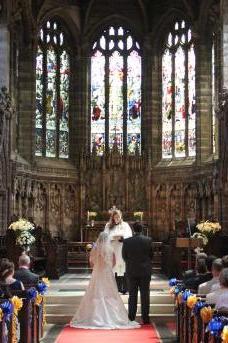
If you are planning on getting married and are thinking of holding the ceremony at one of our churches, this section will provide you with information that will help you understand what’s involved, answer some of your questions, and help make your wedding a really special start to your married life together.
For advice concerning marriage after divorce click here
If you are interested in downloading an electronic copy of this information, please click the following link: PDF copy of Marriage booklet
Common questions
You are likely to have many questions about getting married at one of our churches. You are always welcome to discuss your wedding plans with one of the clergy, but we have compiled some of the common questions that we are frequently asked to get you started.
Scroll down the page to read each of the questions and answers in turn, or click on the links below to be taken directly to a specific question.
- How are church weddings different from weddings in registry offices or licensed premises?
- Can I get married in one of the 3 churches in the Parish of Aston and Nechells?
- How do I know if I live in the parish?
- Do I have to regularly go to church to be allowed get married in church?
- Do I need to be baptised / confirmed?
- I am divorced, can I still have a church wedding?
- How do I / we arrange the wedding?
- What are ‘banns’ and a ‘licence’? Which do we need
- Do I need to get a separate Wedding Certificate from the Registrar of Marriages?
- Do you provide any support in preparing for married life?
- Will there be a rehearsal?
- What happens in the Wedding Service?
- What happens if I’m late on the day?
- How much will the wedding cost?
- How much extra is it for bells to be rung?
- How do I pay and when?
- Why do we have to pay a deposit?
- Do you allow a photographer and video inside the church?
- Can we decorate the church with our own flowers, for example?
- I don’t know what music to have, can you help?
- Where can I find more information?
Q: How are church weddings different from weddings in registry offices or licensed premises?
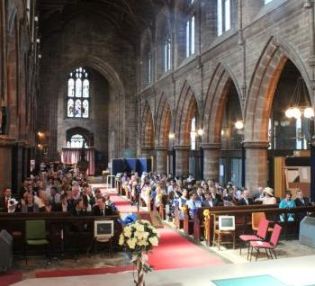
A: Civil weddings and church weddings have some similarities and some important differences. A civil wedding, which may take place in a registry office or another place specially licensed for weddings, concentrates on meeting the obligations for a legal marriage. A church wedding concerns itself with spiritual obligations and celebrations as well as the legal obligations. In a civil wedding you just make your promises before the guests. In a church wedding, you make your promises before God as well, and then we ask for God’s help for you in your marriage.
To go back to Common Questions click here
Q: Can I get married in one of the 3 churches in the Parish of Aston and Nechells?
A: Yes, if:
- one of you lives in the parish up to the time of the wedding (see our parish boundaries on a map), or
- one of you is a regular attender of one of the churches and are on the church’s membership list (Electoral Roll).
- one of you was baptised in the parish
- one of you was confirmed or prepared for confirmation in the parish
- one of you has ever lived in the parish for 6 months or more
- one of you has at any time regularly attended public worship in the parish for 6 months or more
- one of your parents has lived in the parish for 6 months or more in your lifetime
- one of your parents has regularly attended public worship in the parish for 6 months or more during your lifetime
- one of your parents or grandparents were married in the parish
Also, if you wish to get married in Aston Parish Church, special arrangements apply for people who live in the following parishes:
- St. George‘s (Newtown)
- St Paul & St. Silas (Lozells)
- Christ the King (Erdington) – includes St. Martin’s (Perry Common) and St Margaret’s (Short Heath)
- St. Mark’s (Stockland Green)
Special note for divorcees: If either of you have been married before to someone who is still living, there is no automatic right to get married in church and the situation is more complicated. Please read the section on marriage after divorce. You will be expected to consider the points made in this document very carefully and discuss them fully with the vicar before a decision can be made.
To go back to Common Questions click here
Q: How do I know if I live in the parish?
A: The clergy will be able to tell you if you live in the parish. The parish boundaries are shown on our map in the contact section.
To go back to Common Questions click here
Q: Do I have to regularly go to church to be allowed get married in church?
A: No you don’t – there is no legal duty. However, you may want to think about it. In the Wedding Service you make your vows before God and promise to love each other. We also ask for God’s blessing and help in your marriage. Coming to church will help you to find out more about the God before whom you will make your promises and about the good things that he wants in your lives. Do you know about God and his love for you, which can deepen your love for each other?
Coming to church regularly is a way of finding out more. The service at Aston Parish Church is at 10.45 in the morning and at St. James and St. Matthew’s the service is at 11am. Coming to church is a way of meeting with God. Also those who have started to come are often surprised by how they encounter God in worship and by the friendliness of the people and experience of the service.
To go back to Common Questions click here
Q: Do I need to be baptised / confirmed?
A: Not if you live in our Parish, but we would encourage you to explore this as you grow with God. If you live outside our parish, you may need to be on to the Electoral Roll to be married in one of our churches, and to do this you must have been baptised.
To go back to Common Questions click here
Q: I am divorced, can I still have a church wedding?
A: Maybe. There is no automatic right for divorcees to get married in church if their previous spouse is still living. However, neither are they automatically precluded from doing so. We believe that God teaches us that marriage is for life, but we also believe that God offers forgiveness and a second chance to us all. A fuller answer to this question, and the criteria that must all be met for marriage in church after divorce to take place is found in our marriage after divorce policy. You will be expected to consider the points made in this policy very carefully and discuss them fully with the Vicar or Associate Vicar before a decision can be made.
To go back to Common Questions click here
Q: How do I / we arrange the wedding?
A: The first thing to do is to speak to one of the clergy after one of the services or by telephone. Alternatively you may call Aston Parish Church office to speak to the administrator who will also be able to help you get started.
Either the clergy or administrator will be able to explain what is involved in arranging the marriage service – most of which can be found on this webpage. They will also take down your basic details (name, address, age etc.) which is needed for the Marriage document and explain about banns or licence, marriage preparation, and (of course) your desired date and time for your wedding.
Getting married in church requires a great deal of preparation, and it’s recommended that you speak to the Vicar or one of the other staff as early as possible in your arrangements. The church will not usually be able to marry you without a minimum of two months notice. When you speak to them, they will explain what is involved, including the preparation, banns, and the date itself.
To go back to Common Questions click here
Q: What are ‘Banns’ and a ‘Licence’? Which do we need?
A: BANNS – If both of you hold British passports you will usually be married by banns. These are the announcement in church that the wedding is going to happen. They give people chance to object. It is the legal requirement and they must be read in the church in which you are going to be married on three successive Sundays within 3 months before the date of the wedding. If one of you is living in another parish, the banns must also be read in the Church of England church in that parish too. We will let you know the name and contact details of your local Vicar so you can make arrangements. You can’t get married without giving us a certificate showing that the banns have been called.
LICENCE – If either of you does not hold a British passport, you will probably need to be married by Bishop’s Licence (sometimes Jamaican passport holders may be married by banns). A Bishop’s Licence is issued by the Diocesan Registrar, but this can only be done after you have first booked the wedding with us.
The Registrar’s clerk is Ms. Pat Joyce (tel. 0800 763 1483) and her office is No. 1 Colmore Square, near Snow Hill station. She will need photographic proof of identity and will charge you £200, which needs to be brought as a cash amount when you take proof of identity. She will then issue the Licence for you to give to us.
It is your responsibility to check whether English marriages are recognised in your home country. You may need to register your wedding with your own registry, embassy or consulate.
To go back to Common Questions click here
Q: Do I need to get a separate Wedding Certificate from the Registrar of Marriages?
A: No. The signing of the wedding register takes place as part of the service, and the certificate is given to you at that time. The charge for this is all included in the original fee.
To go back to Common Questions click here
Q: Do you provide any support in preparing for married life?
A: We believe preparation is really important and will not marry you without you attending a marriage preparation day, which is held on a Saturday (10 am – 4 pm) 3 or 4 times a year. The preparation days provide a good chance for you to get to know each other more deeply, get away from all the details and settle down to think about what marriage is really all about, the vows, the promise and the words used with the rings. There is a chance to meet other engaged and married couples from the Church and share their experience.
To go back to Common Questions click here
Q: Will there be a rehearsal?
A: There will be a rehearsal for your wedding a few days before so that you will know exactly where to stand, what to say and when to say it. It is helpful if everyone who is taking part in the service comes to the rehearsal i.e. yourselves, bridesmaids, best man, the person who is “giving away” etc. You won’t need to remember anything, just be prepared “inside” to say the words.
To go back to Common Questions click here
Q: What happens in the Wedding Service?
A: The Wedding service is an act of worship. There are prayers to God and readings from the Bible. The vows and promises and words used with the rings and other details of the usual Church of England marriage service can be found here.
There are also some elements that have to be part of the service, such as declarations and vows, otherwise the couple are not married at the end of the service! Otherwise, much of what goes into the rest of the service depends on you. It is your wedding day, and we want to help you to design a service that will make it most memorable for you. You may want to sing some hymns or songs.
The clergy will be very happy to help you shape your service as your wedding day draws near.
To go back to Common Questions click here
Q: What happens if I’m late on the day?
A: The time you book is the time of the wedding. Anyone who is more than a few minutes late takes a very big risk. There may be a wedding later in the day and your wedding may have to be delayed to later in the day, or postponed to a later date. Even if there is not another wedding, the organist, bell ringers, or Minister often have other appointments to go to. Also volunteer members of the church such as church wardens may also have other commitments and your lateness would take advantage of their goodwill as they are giving their time freely.
The Minister reserves the right to omit part of the agreed service in the case of lateness where delay or postponement does not take place. When you book your wedding we take a non-refundable deposit of £100. This deposit is returned if the wedding starts within 15 minutes of the time booked.
To go back to Common Questions click here
Q: How much will the wedding cost?
A: Wedding fees are set annually by the Central Church authorities and our Church Council and go towards the church upkeep and central church costs. For 2024, the fee for a wedding service in one of our churches is between £667 and £1040. This includes a charge of £36 for reading the banns and the non-refundable deposit of £100, which is only returned provided that the service starts within 15 minutes of the agreed start time. The exact cost will depend on whether you want an organist and / or PA at the wedding, whether heating is needed (the cost of heating varies for each church) and the length of the service.
At the Marriage Preparation day, we will discuss your requirements for your wedding service, and agree the exact fee for your wedding.
The fees usually increase by a small amount each year.
Please note that the fees for a licence are paid directly to the Registrar, and we do not charge the fees for banns if a licence is issued.
To go back to Common Questions click here
Q: How much extra is it for bells?
Additional charges apply if you want the bells rung for your wedding (this is only available at Aston Parish Church). There is one ringer for each bell and their scale of fees is shown below. There is a great range of choices, you need to contact the Ringing Master or come and see him on a Sunday morning. All the ringers are local people and many of them are from Aston Parish Church. Bells must be booked at least 4 weeks in advance. Bells may not be rung if the wedding is late. Payment for the bells can be made at the same time as payment for your wedding service.
| Fees for bells to be rung 2024 | Ringers’ fees | Maintenance | TOTAL COST |
|---|---|---|---|
| 6 bells rung in OR out | £195 | £60 | £255 |
| 6 bells rung in AND out (for services of less than 1 hour) | £250 | £60 | £310 |
| 6 bells rung in AND out (for services of 1 hour or over) | £325 | £60 | £385 |
| 8 bells rung in OR out | £260 | £60 | £320 |
| 8 bells rung in AND out (for services of less than 1 hour) | £330 | £60 | £390 |
| 8 bells rung in AND out (for services of 1 hour or over) | £435 | £60 | £495 |
| 10 bells rung in OR out | £360 | £60 | £420 |
| 10 bells rung in AND out (for services of less than 1 hour) | £460 | £60 | £520 |
| 10 bells rung in AND out (for services of 1 hour or over) | £605 | £60 | £665 |
| 12 bells rung in OR out | £430 | £60 | £490 |
| 12 bells rung in AND out (for services of less than 1 hour) | £480 | £60 | £540 |
| 12 bells rung in AND out (for services of 1 hour or over) | £725 | £60 | £785 |
The fees table includes £60 for upkeep of the bells, which is payable to the church. When paying the fees, you can either pay in two lots of cash (one for fee and one for maintenance), or one cheque (made payable to ‘The Parish of Aston and Nechells) for the full amount, which will then be divided up by the church.
The Bells will normally be rung for 20 minutes at each session of ringing. However if the bride is exceptionally late, time will be taken off the outgoing session of ringing. Should the ringing be for in only, ringing will cease after 30 minutes. The Bell ringers will be on site for a maximum of 60 minutes. Anyone requiring more time will need to pre-arrange this with the Ringing Master and a further fee will be charged to cover the extra time. All monies must be paid in full at least 4 weeks before the wedding.
To go back to Common Questions click here
Q: How do I pay and when?
A deposit of £100 is required on booking to secure your wedding date (although if you need to come on to the Electoral Roll the booking can only be provisional until this has happened). This deposit is returned if the wedding service starts within 15 minutes of the agreed time, otherwise it is non-refundable. The remainder of the fees should be paid NO LATER THAN two weeks before the wedding service. If payment is not made, the wedding cannot take place. You will receive a receipt for both the deposit and balance as they are paid.
If you have any difficulties in paying or any other queries with regard to the fees, please talk to one of the clergy.
Fees for bell ringing must be paid separately, directly to the Ringing Master (see contacts). All monies will be required to be paid to the Ringing Master in full at least four weeks before the wedding, and refunds will only be made should be wedding time not exceed 45 minutes and total time for the ringing plus the wedding not exceed 85 minutes.
To go back to Common Questions click here
Q: Why do we have to pay a deposit?
A deposit of £100 is required on booking to secure your wedding date. This deposit is returned if the wedding service starts within 15 minutes of the agreed time, otherwise it is non-refundable. The reason that the deposit is non-refundable, is that when the deposit is paid, it secures the date for the couple, and limits who else can book a wedding on that date; we try to allow where possible only one wedding to take place per day so as to ease the stress of decorating and setting up the church in a short time frame.
If for any reason you wish to postpone or change the date of your wedding at any of our three churches after paying your deposit, you will not have to pay an extra deposit; the one you paid originally will cover that.
However, if you have paid the deposit and then decided you want to cancel the wedding, the deposit will not be refunded.
To go back to Common Questions click here
Q: Do you allow a photographer and video inside the church?
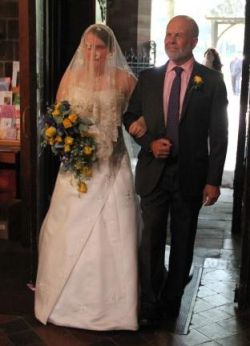
A: Yes, and there is no additional charge. Our guiding principle is that photographers and camera operators are there to record the event, not to become the event. Hence, we do have a few rules for them to observe:
- People doing the photography or the video need to talk to the minister conducting the service to check the details at least 20 minutes before the service begins and understand what is and is not permitted
- Photographers who fail to follow the directions of the minister may be asked to leave the church
- No additional lighting is permitted for video recording
- If the service has started late, time for photographs may need to be limited
- We do not allow flash photography during the Service by either the official photographer or members of the congregation
- After the signing of the Registers, as the bride and groom leave the church, photography may be taken by members of the congregation
- It is illegal to video recorded music without an appropriate licence – a separate leaflet can be provided regarding a video licence.
To go back to Common Questions click here
Q: Can we decorate the church with with our own flowers, for example?
A: Yes. Again, there are a few guidelines:
- You will need to negotiate when and how to arrange access to the church for the decoration to take place. The clergy and church administrators will be able to help with access, but they do have other responsibilities and may not be available at short notice.
- You will need to arrange for your own florist and / or team of people to do the decoration.
- Flowers can be placed within the church, but any flowers already in the church will need to be carefully moved so they can be put back after your service.
- Many couples like to place decorations on the ends of the pews or chairs down the aisle of the church. This is fine, but we do insist that no drawing pins may be used to attach them to the pews or chairs.
- The church may well be being used for other events or services on the day of your wedding, for which your decorations may not be appropriate. If this is the case, we will try to give you as much notice as possible so you can arrange for your decorating team to be available when the previous service or event has ended.
To go back to Common Questions click here
Q: I don’t know what music to have, can you help?
A: Yes. You can choose either traditional music for entry, exit and for signing of the register, for which usually our organist will play. Or you can play your own choice of CDs or bring your own organist / musicians. We will help you with your choice of music and hymns if you are not sure. The Church of England website also has some helpful recommendations to help you choose music and readings for your wedding day.
To go back to Common Questions click here
Q: Where can I find more information?
If you have any more questions, do ask one of the clergy. In addition, you can find more information on getting married in a Church of England church at the main Church of England website or the Diocese of Birmingham website.
There are also many books available on marriage from the Church of England, as well as the wider market. To find details of these, please visit the Church House Publishing and Church House Bookshop websites.
The Citizens Advice Bureau also has an excellent section on getting married.
Marriage in Church after Divorce
Information you may be interested in.
- The Church’s teachings
- Current practice
- Criteria for marriage after divorce
- How the decision will be made
The church’s teachings
The Church’s teaching, drawn from the Bible, is that marriage is for life and that God hates divorce. When questioned, Jesus spoke out against an accepted view in his time that divorce was possible for any reason whatsoever (‘no-fault’ divorce – Matthew 19:3-9). He pointed out that the part of the Old Testament people drew this view from (Deuteronomy 24:1) really only applied to adultery. He would also have known and accepted the Jewish understanding (drawn from Exodus 21:10f), that in marriage couples are to ensure that they love, feed and otherwise provide for each other, and failure to do so constituted grounds for divorce. This is reflected in the marriage vows where, drawing from Ephesians 5:28, we promise to love and to cherish our husband or wife. Hence physical or emotional abuse, and neglecting one’s spouse’s emotional, sexual or material needs break the vows made in marriage. If this is done stubbornly, repeatedly and unrepentantly, then recognised grounds for divorce exist which Jesus did not deny. However, the teachings of Jesus, and teachings from elsewhere in the New Testament, especially 1 Corinthians 7, indicate that Christians should always work at their marriage and seek reconciliation wherever possible rather than divorce.
To return to the top of the section click here
Current practice
The Church of England has recently sought to adopt a more uniform practice with regard to the marriage in church of people who have been divorced and the former spouse is still living. The Church of England’s position is that there is no automatic right to marriage in church after divorce; and that this is only possible in exceptional circumstances.
If a couple are seeking marriage in church when one or both of them are divorced and the previous spouse(s) are still living, the guidelines suggest that the Vicar or Associate Vicar meets at least twice with the couple to discuss their particular circumstances. The Vicar or Associate Vicar will then form a view as to whether their case is one where exceptional circumstances may apply and marriage in church is possible.
To return to the top of the section click here
Criteria for marriage after divorce
The guidelines lay down eight pastoral criteria which must all be met for ‘exceptional circumstances’ to apply:
- The applicants must have a clear understanding of the meaning and purpose of Christian marriage, especially that marriage is intended to be a lifelong, faithful partnership and that divorce is a breach of God’s will.
- The applicants must have a mature view of the circumstances of the breakdown of the previous marriage and be ready to enter wholeheartedly and responsibly into a new relationship. Notably, the divorced person must show that they understand their part in the failure of the previous marriage and that they have learnt from their experiences. Otherwise it would be all too easy to repeat the mistakes of the former marriage in the new marriage. An attitude of repentance, forgiveness and generosity towards their former spouse will also show that the applicants are ready to build a new relationship free from the ‘baggage’ of the former marriage.
- Adequate provision (within the applicant’s means) should have been made for any children and the former spouse.
- There must be a reasonable period of time since the divorce was finalised. The further the divorce lies in the past, the more time there will have been to recover from the pain involved and to have achieved a new emotional stability.
- The new marriage must not be a likely cause of hostile public comment or scandal that would have damaging implications for the neighbourhood or the church.
- The relationship between the applicants must not have been a direct cause of the breakdown of the former marriage.
- Neither of the applicants should normally have been married and divorced more than once.
- There should be signs of a developing Christian faith and an appreciation of the need to involve God and his grace in the marriage. In seeking a Christian marriage, you are asking to make your promises before God. Being ready to participate in the life of the local church will demonstrate that you understand that you need and desire God’s on-going help in keeping these promises in your relationship.
To return to the top of the section click here
How the decision will be made
In many cases, forming a view on the basis of two meetings as to whether a couple’s circumstances are exceptional is far from easy or straightforward. It is much easier to form an opinion in the context of regular contact and relationship as part of the worshipping community of the church. It is therefore likely that the Vicar or Associate Vicar will suggest after an initial meeting that a final decision on whether a couple can be married in church after divorce will only be possible after they have been regularly participating in the life of the church for some while. This also demonstrates the couple’s desire, reflected in criteria 8. above, to involve God in their relationship.